
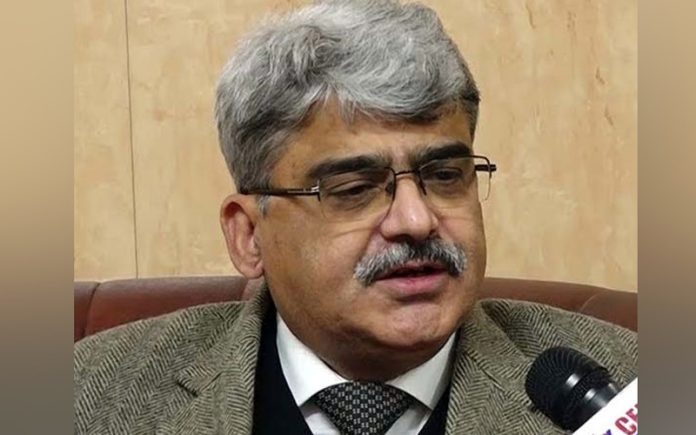
The Chief Secretary of Jammu and Kashmir, Atal Dulloo, convened a high-level meeting today aimed at ensuring the smooth transportation of fruit consignments from the Kashmir Valley to markets outside the Union Territory. The review focused on current logistics, highway conditions, and future transportation strategies.
Attendees included notable officials such as the Divisional Commissioner of Kashmir, Secretary of the Transport Department, and the Inspector General of Traffic, among others. Their collective input highlighted the strategic importance of efficient transportation in maintaining the region’s economic stability, particularly during the peak harvest season.
At the meeting, Chief Secretary Dulloo assessed the operational status of the Jammu–Srinagar National Highway (NH-44), focusing on its capacity to facilitate the movement of fruit-laden trucks from the Valley. He expressed concern over the need for unhindered passage of essential commodities entering and leaving Kashmir.
“No fruit truck should remain stranded on the highway,” Dulloo emphasized, directing all concerned departments to prioritize the safe passage of these vehicles. He also called for immediate measures to clear vehicles stranded on both sides of NH-44, demonstrating the government’s commitment to uninterrupted logistics for fruit transport.
Looking towards the future, the Chief Secretary advised the Divisional Commissioner, Kashmir, to evaluate the potential for introducing rail freight services tailored for transporting horticultural products to major markets such as Mumbai, Kolkata, and Bengaluru. This initiative aims to diversify options available for fruit growers and ensure timely delivery to growers across the nation.
“This option requires thorough consultation with fruit growers and coordination with the Divisional Railway Manager (DRM), Jammu,” Dulloo instructed, showcasing a forward-thinking approach towards regional transportation challenges.
The Divisional Commissioner of Kashmir assured him that there are sufficient transportation facilities available at reasonable rates, indicating that fruit growers are not currently facing major logistical hurdles. This assertion comes as a relief amidst rising concerns regarding transportation issues in the mountainous terrain of the region.
Secretary of the Transport Department, Avny Lavasa, provided insights into contingency measures, stating that in instances of vehicle shortages, the Jammu and Kashmir State Road Transport Corporation (J&K SRTC) will mobilize its fleet to ensure smooth evacuation of fruit produce from the Valley to outside markets.
The Chief Secretary reiterated the administration’s unwavering determination to support the horticulture sector, recognizing it as a key pillar of Kashmir’s economy. He called upon all related departments to maintain close coordination and take proactive measures to bolster the seamless movement of fruit consignments during the busy harvest season.
By addressing logistical challenges and introducing innovative transportation channels, the government aims to enhance the stability of fruit consignment transport, subsequently supporting the livelihood of farmers and reinforcing the significance of the agriculture sector in Jammu and Kashmir.


