
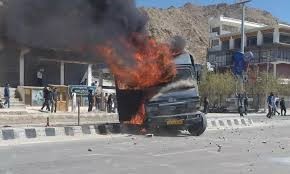
Four people died and 30 others sustained injuries during violent clashes between protesters and security forces in Leh, Ladakh, on Wednesday. The Leh Apex Body (LAB) organized a shutdown to advocate for statehood and the implementation of the Sixth Schedule, sparking widespread unrest.
Officials reported that tensions spiraled throughout the day, resulting in the deployment of police forces who resorted to firing to regain control of the situation. Protesters, advocating for clemency for their political demands, engaged in violent activities, targeting a BJP office and damaging several vehicles.
Eyewitness accounts suggest that the protesters expressed discontent over the police’s handling of the demonstration, claiming the four victims fell to police gunfire amidst escalating chaos.
The protests stem from a prolonged struggle initiated by the LAB’s youth wing, which called for action following the hospitalization of two hunger strikers. These two individuals, part of a group demanding statehood and Sixth Schedule status for Ladakh, had been on a hunger strike since September 10. Their deteriorating health sparked an urgent rallying of protestors on Wednesday.
The LAB’s call for a shutdown reflects a deep-rooted sentiment among the people of Ladakh who are seeking greater autonomy and constitutional safeguards. The Sixth Schedule, designed to offer special provisions for the administration of tribal areas, is a key component of their demands.
Local authorities have faced criticism for their tactics in handling the protest, as the situation quickly escalated. Violence erupted despite previous attempts at dialogue and negotiation between protest organizers and government representatives. The ongoing unrest spotlights the delicate balance between regional governance and the aspirations of Ladakh’s citizens.
In response to the unrest, the police released a statement emphasizing their responsibility to maintain order during the protests. They stated, “While we respect the right to protest, violence is never an acceptable means to express grievances. We urge all citizens to remain peaceful and refrain from engaging in conflict.”
The violent incidents that transpired on Wednesday have resonated throughout the region, generating widespread concern among local leaders and political analysts about the future course of Ladakh’s demands. The escalation of tensions emphasizes the urgent need for dialogue between local representatives and government officials.
As the situation develops, community leaders and political activists advocate for constructive discussions to address the root causes of discontent. Both sides have expressed a willingness to engage, suggesting that the path forward may include negotiations around the aspirations for statehood and greater representation within the Indian Union.
Authorities continue to assess the aftermath of the clashes, with Rahat Singh, a prominent local activist, stating, “We have to find a solution led by conversation and understanding, rather than violence. The future of Ladakh depends on how well we can communicate our needs to those in power.”
Wednesday’s clashes painted a stark picture of the frustrations held by many in Ladakh as they navigate their evolving identity within India. The dialogue around statehood, empowerment, and self-governance remains crucial in shaping the narrative of Ladakh’s political landscape.


